sales@pemconfinement.com ♦ (+65) 6293 9249 ♦ Mon - Sun : 10:00AM - 7:00PM

Newborn Bathing Basics

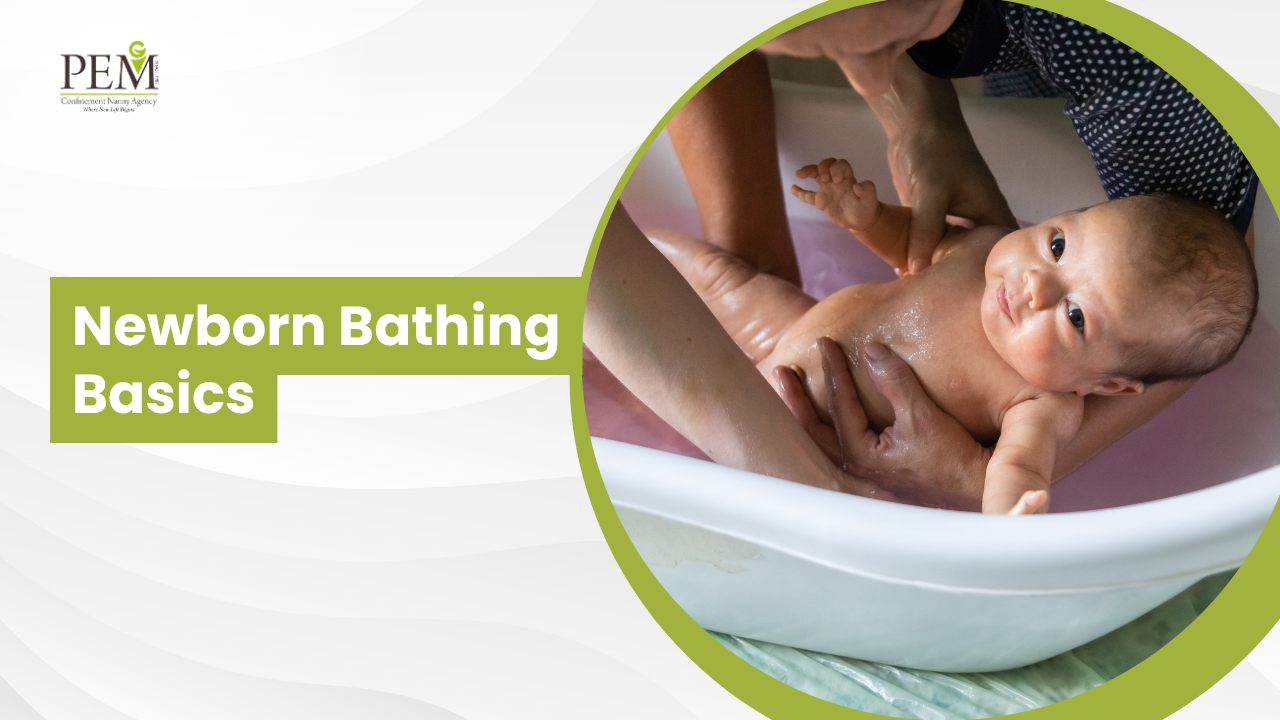

Bathing your newborn for the first time can feel a little nerve-racking. They’re tiny, wriggly and surprisingly slippery when wet, so it’s completely understandable if you’re unsure where to start.
The good news is that newborn bath time doesn’t need to be complicated. With everything prepared beforehand and a few basic safety steps in mind, it can gradually become an enjoyable part of your routine — and even a lovely opportunity to bond with your baby.
From sponge baths to your baby’s first tub bath, here’s a practical guide to help you get started.
When Can You Give Your Newborn Their First Bath?
There’s no need to rush your newborn’s first bath. The World Health Organization recommends delaying the first bath until at least 24 hours after birth where possible.
Once you’re home, your baby doesn’t need a full bath every day either. In between baths, you can gently clean areas that tend to get messy, such as the face, neck, hands and nappy area.
Choose a time when your baby is awake and content rather than hungry, tired or immediately after a feed. Keeping the room comfortably warm can also help make the experience more pleasant.
How Often Should You Bathe a Newborn?
Newborns don’t usually need daily baths. Around two to three baths per week is generally enough, provided you’re regularly cleaning the face, neck, hands and nappy area.
Bathing too frequently may dry out your baby’s delicate skin, particularly when soaps or cleansers are used often. If your baby enjoys bath time, you can adjust the routine to suit your family, while continuing to keep their skin comfortable.
What Do You Need Before Bathing Your Newborn?
Preparation makes bath time much easier — and safer. Once your baby is in the bath, you should never leave them unattended, even for a few seconds.
Have these essentials within arm’s reach before you begin:
- A baby bath, basin or bowl
- Warm water
- Soft washcloth or cotton wool
- Two clean towels
- A fresh nappy
- Clean baby clothes
- A mild, baby-friendly cleanser if needed
During the first month, plain water may be all you need for your baby’s skin.
Sponge Bath: A Gentle Start for Your Newborn
A sponge bath allows you to clean your baby without placing their whole body into the water. It can be particularly useful during the first few weeks while you’re still getting comfortable handling your newborn.
Start by placing your baby on a safe, stable surface. Keep them wrapped in a towel and uncover only the area you’re washing so they stay comfortably warm.
Gently wipe around the eyes using fresh cotton wool for each eye, working from the nose outwards. Continue with the face, around the ears, neck and hands before moving down the body.
Pay attention to little skin folds, particularly around the neck, arms and legs, where milk, sweat and moisture can collect. Clean the nappy area last, then gently pat your baby dry before putting on a fresh nappy and clean clothes.
What About the Umbilical Cord Stump?
Before your baby’s umbilical cord stump falls off and the area heals, you may prefer to stick with sponge baths and keep the stump clean and dry. The stump commonly falls off within the first few weeks.
You don’t need to repeatedly clean the cord if it isn’t dirty. If urine or stool gets onto the area, gently clean it and carefully pat it dry.
Keep an eye on the area as it heals. Contact your baby’s healthcare provider if you notice concerning signs such as spreading redness, swelling or foul-smelling discharge.
Moving From a Sponge Bath to a Tub Bath
Once the umbilical cord stump has fallen off and the area has healed, you can begin introducing a tub bath.
Don’t worry if your baby isn’t immediately impressed! Some newborns love being in warm water, while others cry through their first few baths. You can keep the first tub baths short and gentle while both you and your baby get used to the new routine.
If your baby becomes very upset, there’s no need to force it. You can return to sponge bathing and try a tub bath again another day.

How to Give Your Newborn a Tub Bath
Before starting, prepare everything you need and place it within easy reach.
Fill the baby tub with a shallow amount of comfortably warm water. Check the temperature carefully before placing your baby inside.
When you’re ready, gently lower your baby into the tub while securely supporting their head, neck and shoulders. Keep their head clear of the water throughout the bath. Use your free hand to gently wash their body, paying attention to skin folds without scrubbing.
Once bath time is over, carefully lift your baby out and wrap them in a clean towel straight away. Pat — rather than rub — their skin dry, particularly between the folds, before putting on a fresh nappy and clothes.
Sponge Bath vs Tub Bath: What’s the Difference?
Both methods can keep your newborn clean, but they are useful at different stages.
| Sponge Bath | Tub Bath | |
| How it’s done | Baby is wiped gently without being immersed in water | Baby is gently lowered into a shallow baby bath |
| When it’s useful | Particularly useful during the early newborn stage | Once the umbilical area has healed |
| Umbilical cord | Helps keep the cord stump dry | Usually introduced after the stump falls off and heals |
| Main benefit | Simple and gentle for early cleaning | Helps baby gradually become familiar with bath time |
There is no need to rush from one to the other. Follow your baby’s needs and your healthcare provider’s advice.
What Is the Right Bath Water Temperature?
Your baby’s bath water should feel comfortably warm, not hot.
You can test the water using your wrist or elbow before putting your baby in. Mix the water thoroughly so there are no unexpectedly hot areas. If you’re filling the bath using taps, add cold water first and then hot water.
Most importantly, don’t place your baby in the bath while water is still running, as the temperature can change unexpectedly.
Newborn Bath Safety: Dos & Don’ts
When it comes to newborn bathing, safety matters more than creating the “perfect” bath routine.
| Do | Don’t |
| Prepare everything before you begin | Leave your baby unattended, even briefly |
| Support baby’s head and shoulders | Rely on a bath seat for supervision |
| Check the water before bathing | Use water that feels hot |
| Keep baby’s head above the water | Fill the tub unnecessarily deep |
| Pat delicate skin dry gently | Rub or scrub baby’s skin |
| Keep towels and clothes within reach | Walk away to answer your phone or door |
Even a small amount of water can present a drowning risk, so always keep your baby within reach and supervised throughout bath time. Bath seats should never be treated as a substitute for adult supervision.
What If Your Newborn Cries During Bath Time?
If bath time comes with tears, don’t panic. Your newborn is experiencing plenty of new sensations, and it may simply take time for them to become comfortable with being undressed and placed in water.
Try choosing a time when your baby isn’t hungry, tired or unsettled. Keep the room warm, make the bath short and speak or sing softly while washing them. Your voice can provide some familiarity and reassurance.
If your baby becomes too distressed, you can stop and try again another time. As you both gain confidence, bath time may gradually become much easier.
How Can a Confinement Nanny Help With Newborn Bathing?
For first-time parents especially, reading about newborn care and actually doing it can feel very different.
Having someone experienced by your side during confinement can help you become more familiar with everyday baby-care routines. A PEM confinement nanny can support you with newborn bathing basics alongside other daily tasks such as feeding, burping, nappy changing and soothing your little one.
More importantly, you can observe how these routines are carried out and gradually become more confident caring for your baby yourself.
With some extra support during those early weeks, you can also have more time to rest and focus on your own postpartum recovery while adjusting to your new routine as a family.
Frequently Asked Questions
Can I bathe my newborn every day?
You don’t need to. Around two to three baths per week is generally enough for a newborn, although you can clean the face, neck, hands and nappy area regularly.
When can I give my newborn a tub bath?
Tub baths are generally introduced once the umbilical cord stump has fallen off and the area has healed.
Can I use soap on my newborn?
Plain water is usually enough during the first month. If you do use a cleanser later, choose one that is mild and suitable for babies.
How long should a newborn bath take?
Newborn baths can be kept short and gentle, especially at first. Longer baths may contribute to dry skin, so there is no need to keep your baby in the water for long.
Can I bathe my baby straight after feeding?
It’s better to avoid bathing your baby immediately after a feed. Choose a time when they are awake, comfortable and not hungry or tired.
What if my baby cries during every bath?
Give them time to adjust. Keep baths short, maintain a warm environment and talk gently to your baby. You can also return to sponge baths temporarily and try again later.
Can a confinement nanny help with newborn care?
Yes. A full-time or part-time confinement nanny can help with newborn care such as bathing, feeding, burping and nappy changing.