sales@pemconfinement.com ♦ (+65) 6293 9249 ♦ Mon - Sun : 10:00AM - 7:00PM

Confinement Nanny Singapore: Roles, Pros & Cons, and Why Mums Hire One

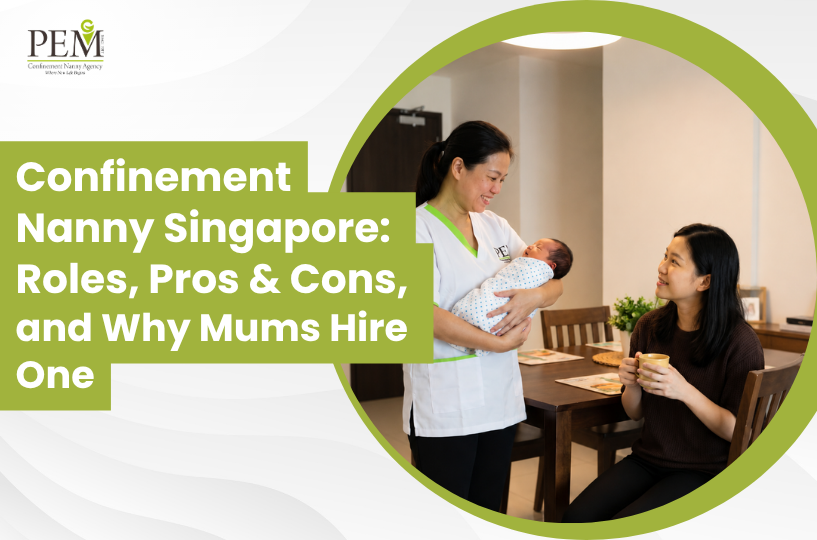

Bringing a newborn home is a joyful experience, but the first few weeks can leave you feeling tired and overwhelmed. As a new mum recovers from childbirth, she also needs to get used to feeding, soothing, and caring for her baby day and night.
That’s why many families in Singapore hire a confinement nanny. These nannies offer short-term, specialised support for both mother and baby during the postpartum period.
Still, inviting someone to live in your home is a big step. Before you book a nanny, it’s good to know what she does, the pros and cons, and how she can help your family get ready for life after confinement.
What Does a Confinement Nanny Do?
A domestic helper usually takes care of general household chores, while a confinement nanny mainly looks after the new mother and her baby.
It is important to talk about her specific duties before the confinement period starts, but these are some of the most common ones.
Caring For The Newborn
A confinement nanny can help with tasks such as:
- bathing and dressing your baby,
- feeding and burping,
- changing diapers,
- soothing your baby,
- handling night feeds,
- keeping track of your baby’s daily routines,
- and washing and sterilising bottles, pump parts, and other baby items.
If you are a first-time parent, having someone experienced show you how to do these things can make caring for your newborn feel much less overwhelming.
Supporting Mum’s Recovery
Every mother’s experience with childbirth is unique. Some may feel sore and tired, while others are healing from a C-section or a tough delivery.
A confinement nanny can take on daily tasks, giving mothers more time to rest, recover, and bond with their babies.
She may also prepare herbal batShe might also prepare herbal baths or drinks based on the family’s preferences. Still, it’s important to stay flexible with traditions and always follow advice from your doctor or healthcare professional. With this support, caring for your newborn can feel less overwhelming.
Preparing Confinement Meals
Nutritious meals matter a lot when a new mum is recovering and looking after her baby.
A confinement nanny usually cooks meals that fit the mum’s dietary needs and preferences. Families should let the nanny know about any allergies, medical advice, ingredients they do not like, or breastfeeding concerns before starting the service.
Providing Breastfeeding Support
Breastfeeding often takes some time for both mum and baby to get used to. Depending on her training and experience, a nanny can show different feeding positions, help with basic latching, and assist with cleaning pump equipment.
If there is ongoing pain, breast inflammation, low milk supply, or any worries about the baby’s feeding, it is best to talk to a doctor or a qualified lactation professional.
Handling Mum’s, Dad’s, And Baby’s Laundry
A confinement nanny often helps by washing and organising clothes, towels, bedding, and other essentials for the mother and baby.
She usually handles laundry for the mother, father and baby, not the whole family. It’s a good idea to talk about these details before the confinement period starts.
Managing Basic Household Chores
A confinement nanny can help with simple household tasks that involve the mother and baby. This might include washing dishes after meals, tidying up the kitchen, keeping the baby’s area neat, and making sure things stay clean.
Still, her main job is to look after the mother and baby. Things like deep cleaning, doing laundry for the whole family, or running the entire household are not usually part of her role unless you discuss and agree on them in advance.
Why Do Mums Hire a Confinement Nanny in Singapore?
Each family’s support system looks different. Some mums get help from their own parents or in-laws, while others have partners who need to go back to work soon.
When parents look up confinement nanny review Singapore, they often see that many mums appreciate the extra rest, practical help, and reassurance they get in the first weeks after giving birth.
Here are some common reasons why families choose to get professional support.
More Time to Rest And Recover
When someone helps with meals, newborn routines, and night care, mum can spend more time resting and recovering.
Guidance for First-Time Parents
Bathing a newborn, learning feeding cues, and soothing a crying baby can feel overwhelming at first. A nanny can show daily care routines and guide parents as they practice.
Support During The Night
Waking up often at night can be exhausting. A live-in nanny can help with night feeds, diaper changes, and soothing the baby, depending on what you agree on together.
If your family prefers more privacy, you might choose a daytime nanny, especially if your spouse, a helper, or a family member can care for the baby at night.
Less Dependence on Family Members
Parents and in-laws often want to help, but they might not always be available. Sometimes, different traditions can also cause tension. Hiring a nanny lets you set up care that fits your own needs and preferences.
Greater Booking Security Through an Agency
If you hire a freelance nanny, you may need to handle their schedule, paperwork, insurance, and travel plans on your own.
A trusted nanny agency can handle these details for you and may offer a replacement if your nanny is unavailable or not the right match.
Pros and Cons of Hiring a Confinement Nanny
Looking at both perspectives can help you figure out if this arrangement is right for your home and way of life.
| Pros | Possible Cons |
| Dedicated care for mum and baby | Less privacy with another person at home |
| More opportunities for mum to rest | Possible personality or communication differences |
| Guidance on newborn routines | Requires a suitable sleeping arrangement |
| Help with confinement meals | Adds to the family’s postpartum expenses |
| Support with selected night duties | Different opinions on baby care or confinement practices |
| Agency assistance and possible replacement | Parents may become overly dependent on the nanny |
When someone new moves in, there might be personality differences or mismatched expectations. Agreeing on clear rules for chores, cleanliness, rest times, phone use, cooking, and baby care can make it easier for everyone to settle in.
How to Prepare for Life After Confinement Nanny Leaves
Many mums worry about how they will manage after the confinement period is over.
When looking for a Singapore confinement nanny review, parents often notice that the best nannies do more than just daily chores. They also help parents learn how to handle newborn routines on their own.
Instead of letting the nanny handle everything until the last day, parents should slowly start joining in with the baby’s routines.
In the last week, you can try to:
- Practice bathing and dressing your baby
- Learn your baby’s feeding and sleeping cues
- Write down any helpful meal recipes.
- Get familiar with how your baby’s things are organised.
- Take over select routines. Start taking over some of the night feed routines you are unsure of
- Make a practical care plan with your partner or helper
The aim is not to copy the nanny’s routine exactly. Instead, focus on finding a safe and manageable routine that suits your family.
Agency or Freelance Confinement Nanny?
Choosing a freelance nanny lets parents pick someone recommended by people they trust. However, families are responsible for handling the agreement, travel plans, and work permit paperwork on their own.
Agencies usually provide a more organised booking process, offer trained nannies, and help with paperwork and customer support.
When looking at different providers, keep these points in mind:
- How nannies are trained and evaluated
- The agency’s experience and reputation
- What happens if you need a replacement nanny
- How the provider ensures the nanny arrives as planned
- Whether the fees are clear and upfront
- If the provider helps with work permit applications
- Customer: How easy is it to get customer support from other parents
For Malaysian confinement nannies working in Singapore, a valid Work Permit, foreign worker levy and medical insurance are required. The permit can be valid for up to 16 weeks from the child’s date of birth.
Why Families Choose PEM Confinement Nanny
If you are searching for a reliable confinement agency review, it is important to look beyond just ratings. Factors like training standards, guaranteed arrival, replacement policies, and ongoing customer support can all make a difference in your experience.
PEM is licensed by the Ministry of Manpower and has helped over 50,000 mothers.
PEM nannies complete 150 hours of training in newborn care, mother’s recovery, and more. Parents also get help with the nanny’s Work Permit, guaranteed arrival, up to two free replacements, and year-round customer service.
Since popular confinement periods fill up quickly, it is best for expecting parents to start enquiring about six to seven months before their due date.
Is Confinement Nanny Right For Your Family?
A confinement nanny can be helpful if you want extra support after giving birth, need help at night, or do not have family members with experience to assist you.
But choosing a confinement nanny also depends on your budget, how much space you have at home, your need for privacy, and the support you already have.
Before you book, talk with your partner and the nanny provider about what you expect. When everyone knows what the nanny will do, it can give mum more time to rest and help the whole family get used to having a new baby at home.
FAQs
How long does a confinement nanny usually stay?
Most families hire a nanny for 28 days, but you can arrange a shorter or longer stay based on what your family needs and what the provider offers.
Does a confinement nanny care for the baby at night?
A live-in nanny can help with night feeds, diaper changes, and soothing your baby. Be sure to discuss and agree on these details before the service starts.
Does a confinement nanny do housework?
She usually takes care of light tasks for the mother and baby, like doing their laundry, preparing meals, and cleaning baby items. Deep cleaning the whole house is not part of her job.
Can a confinement nanny replace a lactation consultant?
No. While a trained nanny can offer some basic breastfeeding tips, any medical concerns, ongoing pain, or complex feeding problems should be checked by a qualified healthcare or lactation professional.
Should I choose a live-in or daytime confinement nanny?
A live-in nanny is a good choice if you need help both day and night. If your family has limited space, wants more privacy, or already has help at night, a daytime nanny might be better.
When should I book a confinement nanny in Singapore?
It’s best to start looking for a nanny while you’re still pregnant, especially if your due date is during a busy or festive season. Booking six to seven months ahead gives you plenty of time to talk about your needs.